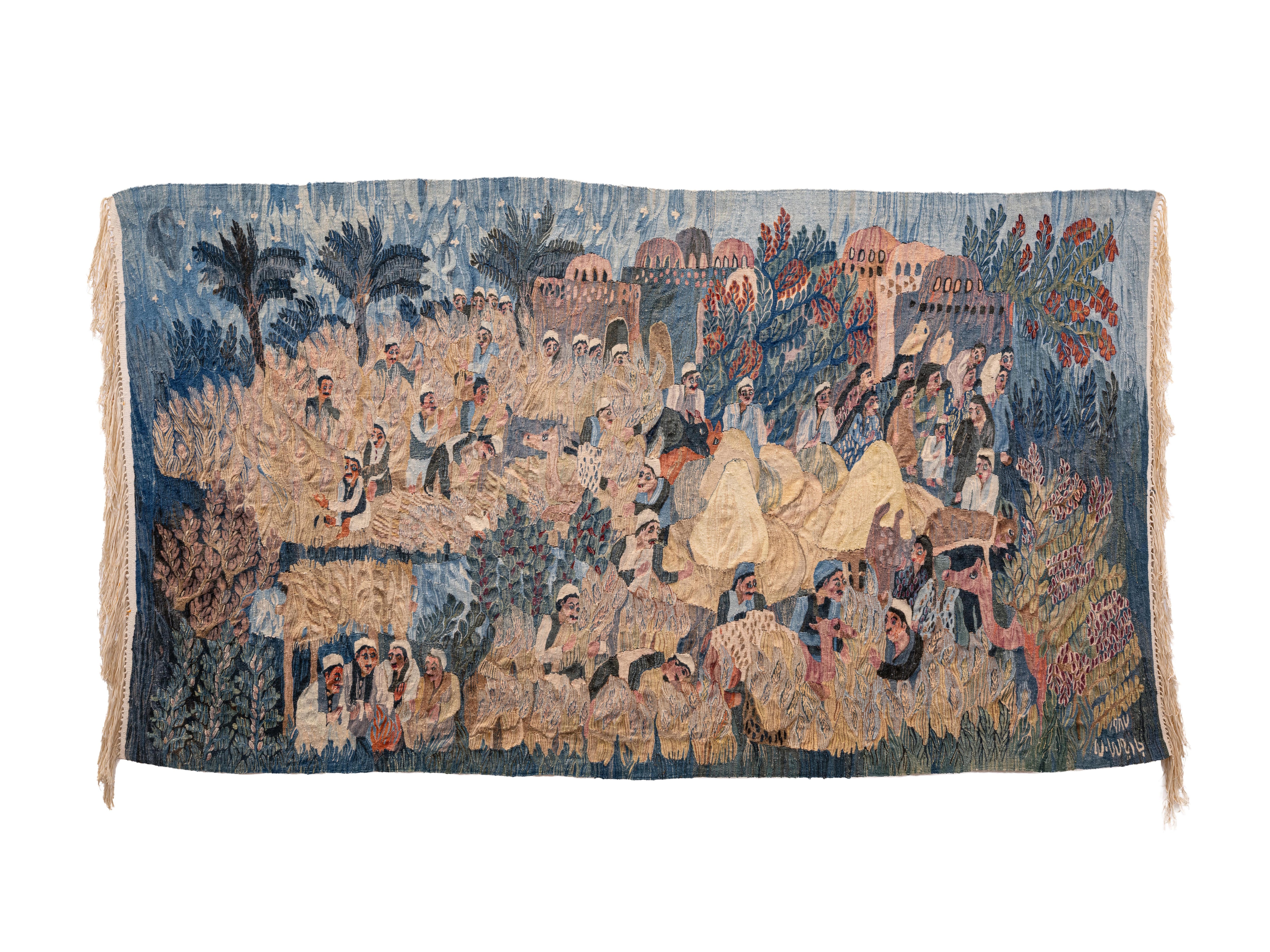
Sultan Sooud Al Qassemi examines the historical significance of the Ramses Wissa Wassef Art Centre, established in 1951 by the architect Ramses Wissa Wassef and his spouse, Sophie Habib Gorgi. The institution initially supported 45 artisans specializing in batik, stoneware, and weaving. One notable work by early weaver Garya Mahmoud illustrates a traditional Upper Egyptian Delta harvest scene, capturing daily life through detailed imagery of agricultural labor and domestic settings. Beyond this artistic output, Ramses Wissa Wassef is recognized for his architectural contributions, including the design of the Mahmoud Mokhtar Museum in Cairo, which opened in 1962, as well as various private residences and religious buildings. The centre remains a testament to the enduring impact of creative patronage and the preservation of traditional craftsmanship in Egypt.
Source : The National
Photo : The National