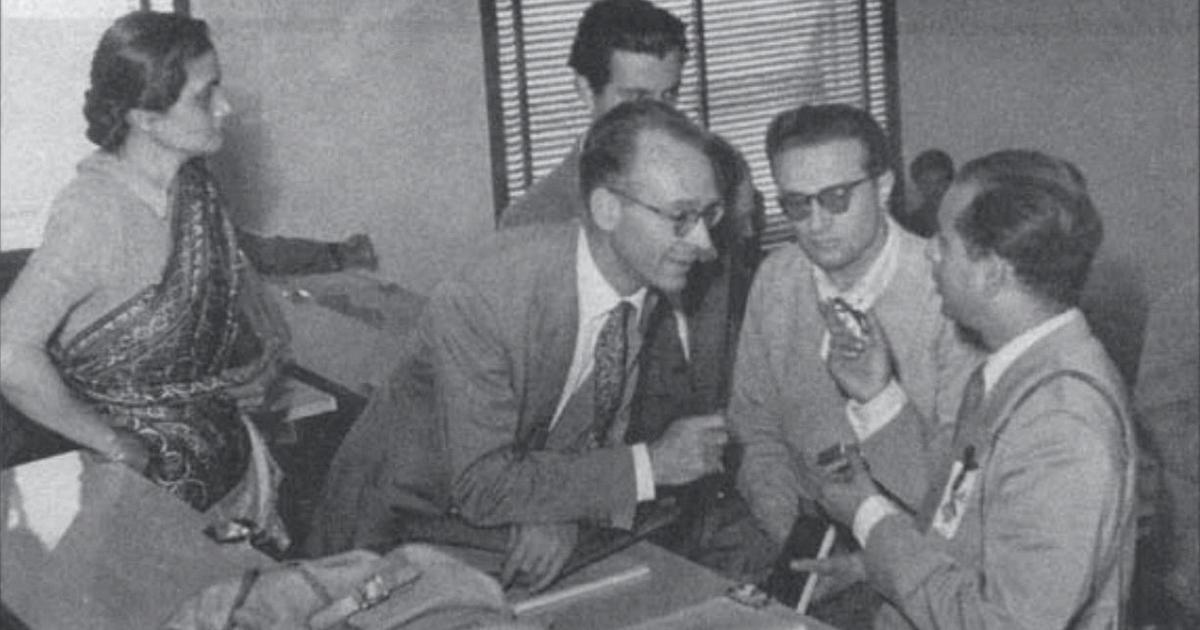
In 1939, physicist Bibha Chowdhuri conducted pioneering research by placing photographic plates treated with samarium sulphate in various locations across India, including Calcutta and Sandakphu. Her objective was to capture evidence of cosmic radiation, which remained otherwise imperceptible. Upon developing the plates exposed at high altitudes in Sandakphu, she identified thirty distinct star-shaped patterns. These microscopic markings served as visual documentation of nuclear disintegration events. Chowdhuri’s methodology aligned with the emerging scientific practice of using photographic emulsions as specialized detectors for subatomic particles, a technique also championed by physicist Marietta Blau. By transforming invisible interactions between cosmic rays and matter into tangible images, Chowdhuri contributed significantly to the field of particle physics during the pre-independence era.
Source : Scroll.in
Photo : Scroll.in