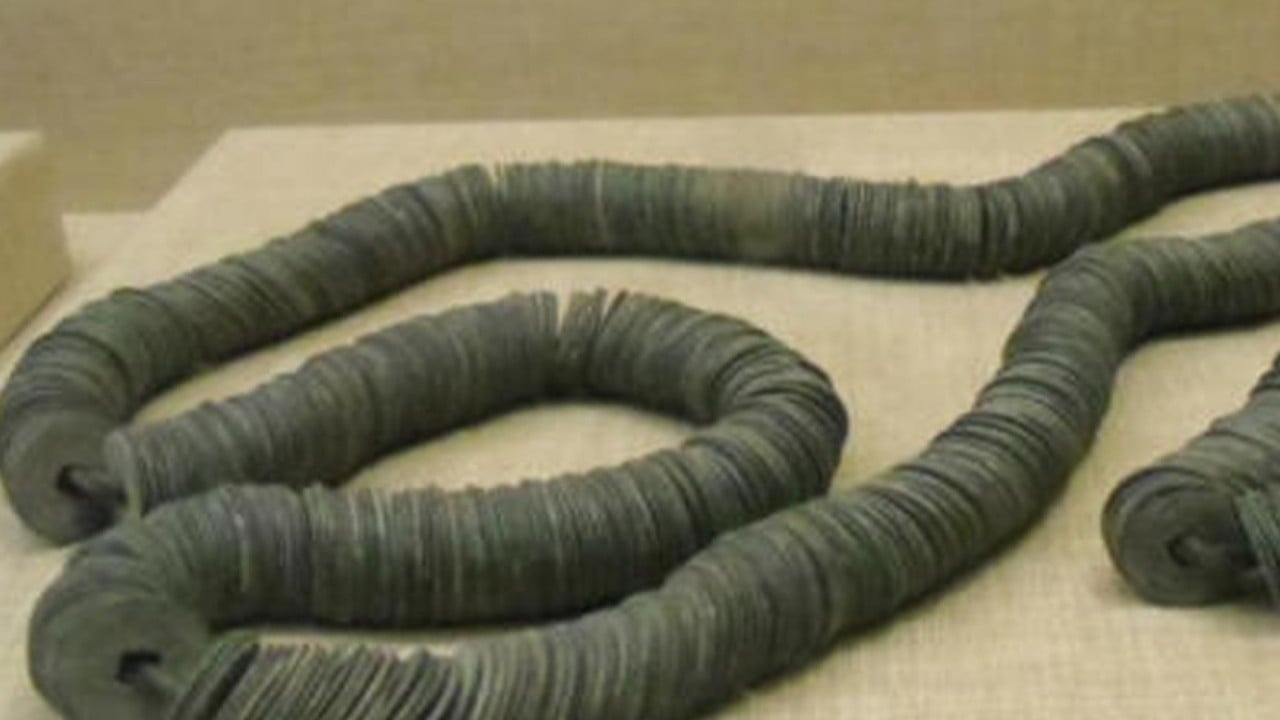
The traditional Chinese idiom 'yao chan wan guan' is frequently employed to denote significant personal wealth. Historically, this expression refers to the 'guan,' a unit of measurement originating during the Qin dynasty. A 'guan' typically consisted of a bundle of 1,000 copper coins threaded together through their characteristic square holes. By examining the etymology of this phrase, historians can better understand the economic systems of ancient China. While the idiom serves as a metaphorical benchmark for prosperity, it is rooted in the physical reality of how currency was organized and transported during that era. Analyzing these monetary units provides insight into the purchasing power and financial structures that defined daily life for citizens in imperial China, moving beyond the simple metaphorical usage of the term in modern language.
Source : South China Morning Post
Photo : South China Morning Post