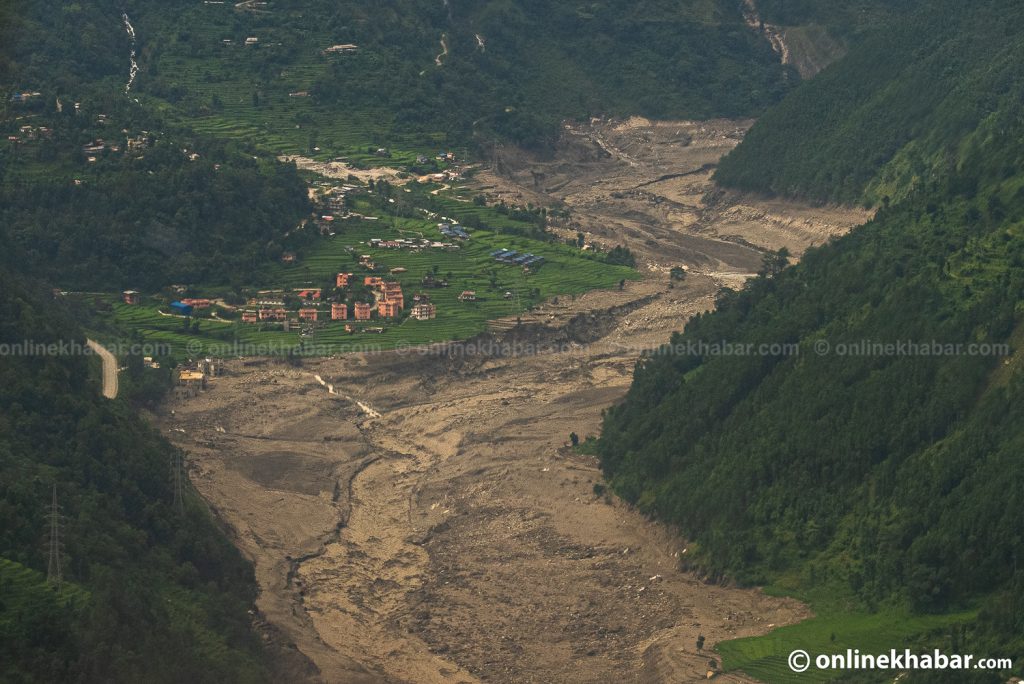
A global group of experts has determined that a significant landslide, rather than seismic activity, was responsible for the catastrophic debris flow and flooding in the Lhende Khola region near the Nepal-Tibet border. This event resulted in over 1,300 fatalities and widespread destruction of infrastructure, including hydropower facilities and urban centers. While initial reports from organizations like the United States Geological Survey hypothesized that a 4.4-magnitude earthquake or a glacial lake outburst might have initiated the disaster, recent analysis of seismic data contradicts these theories. Researchers, including Dr. Kristen Cook from Grenoble Alpes University and Göran Ekström from Columbia University, have concluded that the collapse of rock and ice was driven by landslide dynamics. This finding refines the understanding of the geological processes that led to the tragedy, shifting the focus away from tectonic triggers.
Source : Online Khabar
Photo : Online Khabar